ES | EN

Nasca or Nazca?

What is the correct way to write it? With Z or with S?

Just as happened with Cuzco, replaced by Cusco (or Qosqo), for some time now the traditional proper name “Nazca,” with Z, has been replaced by “Nasca,” with S.

Although, generally speaking, both forms are accepted, the subject deserves a brief reflection. From a practical standpoint, changing a proper name that has been in use for hundreds of years implies a series of problems and creates confusion—for example, in library archives, civil registries, travel agencies, online searches, in delicate matters such as international recognition, and in legal contexts.

For instance: the place UNESCO recognizes as a World Heritage Site is officially named Cuzco, not Cusco, and certainly not Qosqo (the latter term corresponding to a phonetic system outside Spanish). It is argued that the Z is rather Hispanic and reflects the way the conquerors and ruling groups referred to the so-called “navel of the world.” But can history truly be changed by changing names?

In the case of Nazca with Z, the word also corresponds to a specific verbal form: the present subjunctive of the verb nacer (to be born) — yo nazca, tú nazcas, él nazca, etc. Based on various etymological, phonetic, and historical interpretations, the form Nasca (with S) has gradually gained ground and was recognized as official according to a law passed in 2013 by the Congress of the Republic (based on a bill introduced by Congressman José Luis Elías in 2011).

Moreover, UNESCO’s recognition refers to the “Nasca” Lines (with S) as a World Heritage Site. Therefore, that is the spelling (with S) that we use in this blog, except in historical references where the word appears with Z.
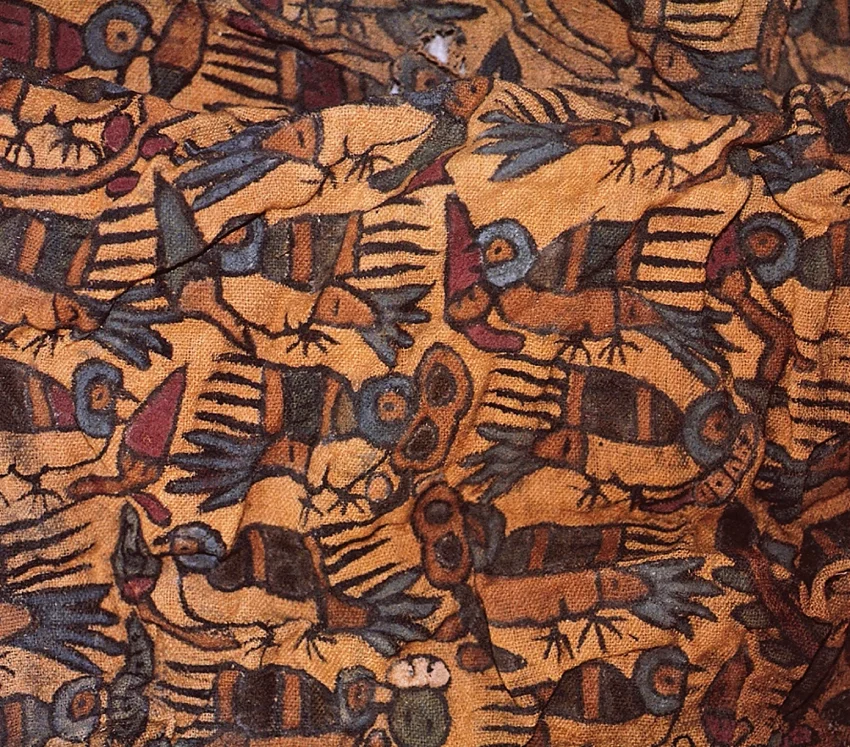
Nasca Figures
Share this post:

Other posts

Giuseppe Orefici: de la arquitectura a la arqueología 2

From Architecture to Archaeology Although Giuseppe Orefici devoted himself entirely to the recovery and preservation of Cahuachi at the beginning of the 1980s, as early as…

In Memoriam: Giuseppe Orefici Pecci (1946-2025)

With great sorrow, we received the news of the passing of archaeologist and architect Dr. Giuseppe Orefici Pecci, which occurred in Brescia, his hometown, on June…

Pirámide de Cahuachi Satelital

First Encounter with Giuseppe Orefici My first encounter with Giuseppe Orefici took place in Nasca in April 2007. We had previously exchanged a long series of…

Oswaldo Enrique Rojas Rojas

Se graduó de la Pontificia Universidad Católica del Perú en la especialidad de Ingeniería de Minas en 1979. Realizó sus estudios de postgrado en Michigan Technological University (MSc), The Pennsylvania State University (PhD) y Harvard Business School (AMP). Inició su carrera en 1980 en Compañia de Minas Buenaventura y BISA. Trabajó en Newmont Mining Corporation durante 22 años, ocupando importantes cargos como Gerente General para el Perú, Vicepresidente para Sudamérica y, posteriormente, Vicepresidente para Australia y Nueva Zelanda.

Asimismo, ha sido Vicepresidente de la Sociedad Nacional de Minería, Petróleo y Energía y Presidente del Comité Minero de la misma asociación, miembro del Directorio de la Sociedad de Minería en Australia y Presidente de La Asociacion Los Andes de Cajamarca (ALAC).

Actualmente es Director de BISA Ingeniería de Proyectos S.A., Director de JRC Ingeniería, Profesor del curso de Gestión Minera en la Pontificia Universidad Católica del Perú, Presidente del Centro de Investigación de Minería, Ambiente y Desarrollo (CIMADE) y Vice Presidente del Patronato del “Centro de Estudios Arqueológicos Precolombinos” (PCEAP).