ES | EN

The Mystery of the Nasca Lines: Science, Myths, and Cahuachi

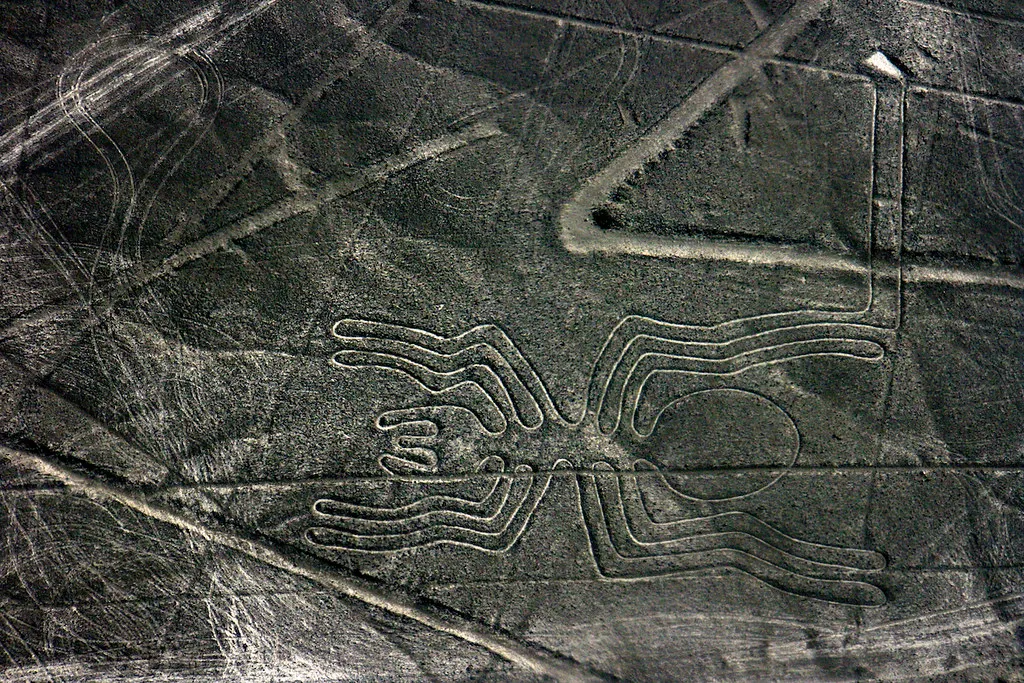
Thanks to the work of scientists such as María Reiche, who dedicated decades to studying the pampas, today we know how the Nasca Lines were made. However, their purpose remains a mystery.

Theories range from an astronomical calendar and places of worship to esoteric explanations linking them to paranormal phenomena and beings from other worlds.
Von Däniken and the Alien Theories

One of the most widespread interpretations is that of Swiss writer Erich von Däniken, who in 1968 published Chariots of the Gods. According to him, the lines were “landing strips for alien spacecraft.”

Von Däniken already had a history of fraud and embezzlement, but his book—considered his masterpiece in the genre of deception—was translated into 26 languages and sold at least 65 million copies.

Although his hypothesis lacks any scientific basis, it did help bring the lines to global attention, though not in the most appropriate way.

Myths and Superstitions Around the Nasca Lines

A quick web search shows the large number of unscientific theories still circulating, many inspired by von Däniken. These interpretations, while striking, have distracted from the true cultural and archaeological value of the lines.

The Contemporary Scientific View

A study carried out by Japanese archaeologists in 2015 suggests that the Nasca and Palpa Lines were not only connected to ritual concerns of the Nasca and neighboring peoples but also functioned as markers along the route to Cahuachi, the great socio-political and religious center of Nasca culture, described by Giuseppe Orefici as a “theocratic capital.”

These lines, rather than being designed to be seen from the sky, can be appreciated from nearby mounds and hills, accompanying the path to Cahuachi and reinforcing its ceremonial role.

“What’s wrong with the idea that the lines were laid down to say to the ‘gods’: ‘Land here! Everything has been prepared just as you ordered’? The builders of the geometric figures may not have known what they were doing. But perhaps they knew perfectly well what the ‘gods’ needed to land.”
—Erich von Däniken, Chariots of the Gods, 1968.
Share this post:

Other posts

Giuseppe Orefici: de la arquitectura a la arqueología 2

From Architecture to Archaeology Although Giuseppe Orefici devoted himself entirely to the recovery and preservation of Cahuachi at the beginning of the 1980s, as early as…

In Memoriam: Giuseppe Orefici Pecci (1946-2025)

With great sorrow, we received the news of the passing of archaeologist and architect Dr. Giuseppe Orefici Pecci, which occurred in Brescia, his hometown, on June…

Pirámide de Cahuachi Satelital

First Encounter with Giuseppe Orefici My first encounter with Giuseppe Orefici took place in Nasca in April 2007. We had previously exchanged a long series of…

Oswaldo Enrique Rojas Rojas

Se graduó de la Pontificia Universidad Católica del Perú en la especialidad de Ingeniería de Minas en 1979. Realizó sus estudios de postgrado en Michigan Technological University (MSc), The Pennsylvania State University (PhD) y Harvard Business School (AMP). Inició su carrera en 1980 en Compañia de Minas Buenaventura y BISA. Trabajó en Newmont Mining Corporation durante 22 años, ocupando importantes cargos como Gerente General para el Perú, Vicepresidente para Sudamérica y, posteriormente, Vicepresidente para Australia y Nueva Zelanda.

Asimismo, ha sido Vicepresidente de la Sociedad Nacional de Minería, Petróleo y Energía y Presidente del Comité Minero de la misma asociación, miembro del Directorio de la Sociedad de Minería en Australia y Presidente de La Asociacion Los Andes de Cajamarca (ALAC).

Actualmente es Director de BISA Ingeniería de Proyectos S.A., Director de JRC Ingeniería, Profesor del curso de Gestión Minera en la Pontificia Universidad Católica del Perú, Presidente del Centro de Investigación de Minería, Ambiente y Desarrollo (CIMADE) y Vice Presidente del Patronato del “Centro de Estudios Arqueológicos Precolombinos” (PCEAP).